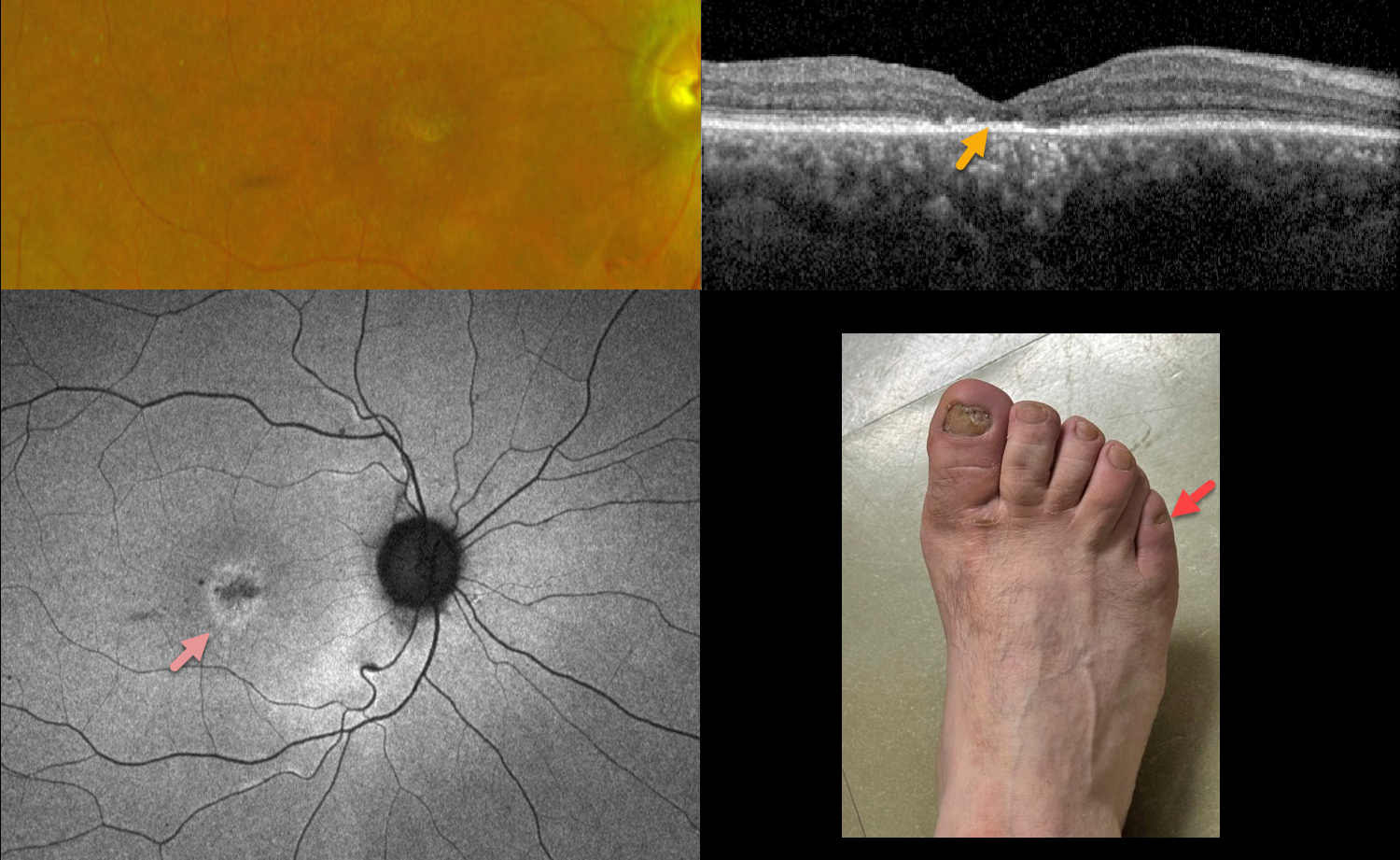
This 51YO male has a history of intellectual developmental disorder, arterial hypertension, polydactyly of his right hand (surgery as a child) and foot. He has complained of poor vision, photophobia, and dyschromatopsia since childhood. Vision was 20/400 OU.
Optos color RG imaging of his right eye shows faint foveal pigmentary changes. These are more prominent on fundus autofluorescence (FAF), which shows increased foveal hyper-FAF with a surrounding ring of hyper-FAF. OCT scanning shows variable thinning of the outer retina and RPE centrally. Identical findings were noted in his left eye (not shown). A sixth toe is noted on his right foot.
Learning Points:
Bardet-Biedl Syndrome (BBS) is a rare autosomal recessive ciliopathy causing multisystem disease via primary cilia dysfunction (Shoemaker, Diabetes Obes 2024;26(Suppl. 2):25-33). Diagnosis is clinical, requiring four primary features (or three primary plus two secondary): rod-cone dystrophy, obesity, polydactyly, hypogonadism, renal anomalies, and learning disability. The defining ocular finding is progressive rod-cone dystrophy, with early night blindness, peripheral field loss, and macular involvement, accompanied by vascular attenuation, disc pallor, abnormal ERG, and blindness by early adulthood.
Our patient’s genetic testing revealed that he was homozygous for the pathogenic variant c.1169T>G p.(Met390Arg) in the BBS1 gene. Continued observation was recommended.